Why visit Chan Chan
Why visit Chan Chan
The largest adobe city of the ancient Americas
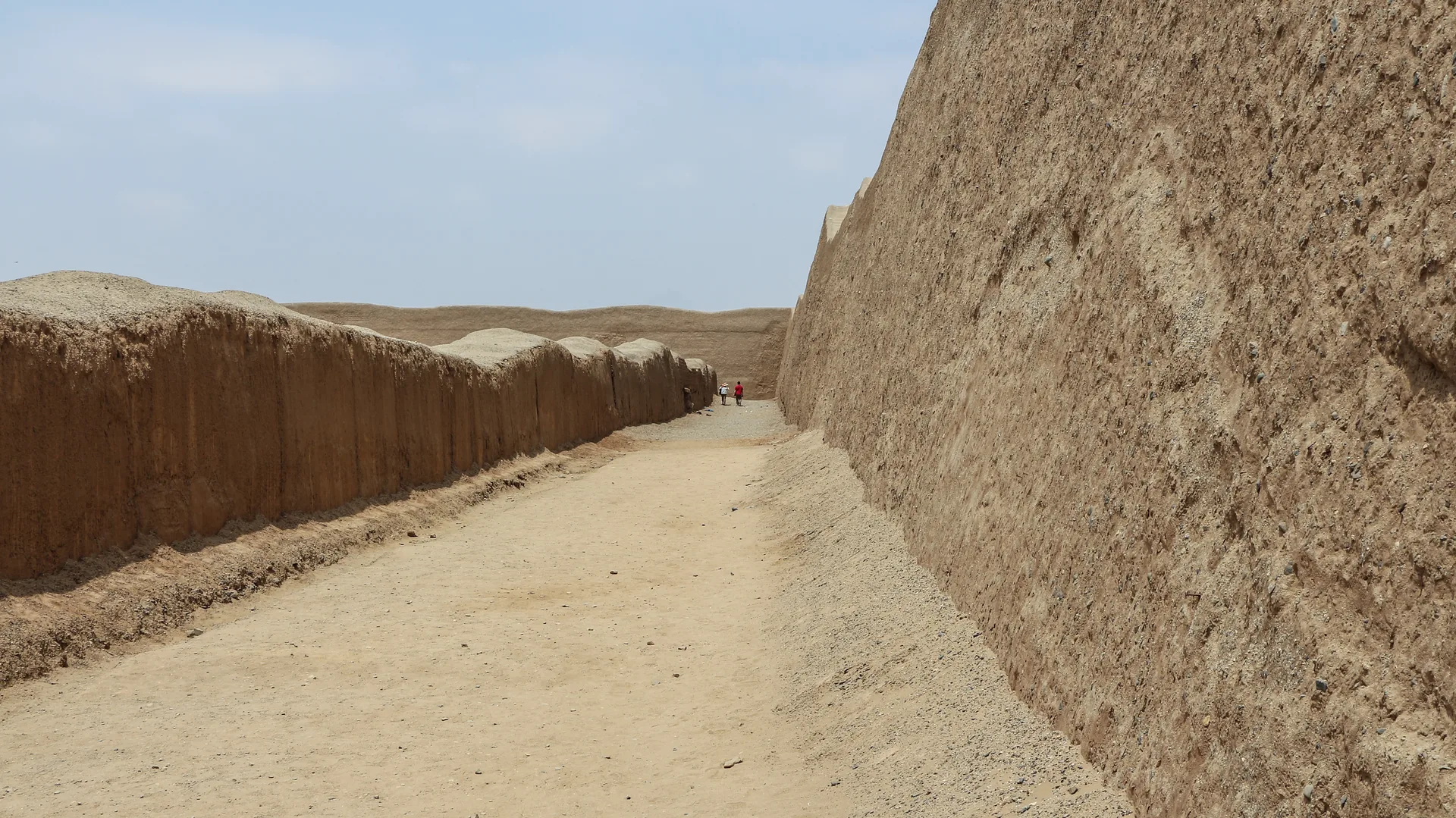
Chan Chan was the capital of the Chimú kingdom of Chimor, built from around AD 850 and spreading across roughly 20 square kilometres of the Moche Valley. Raised entirely in adobe — sun-dried earth — it is the largest earthen city in the ancient Americas and one of the largest in the world. Walking between its towering walls, you sense the scale of a great coastal empire.
Walls carved with the sea
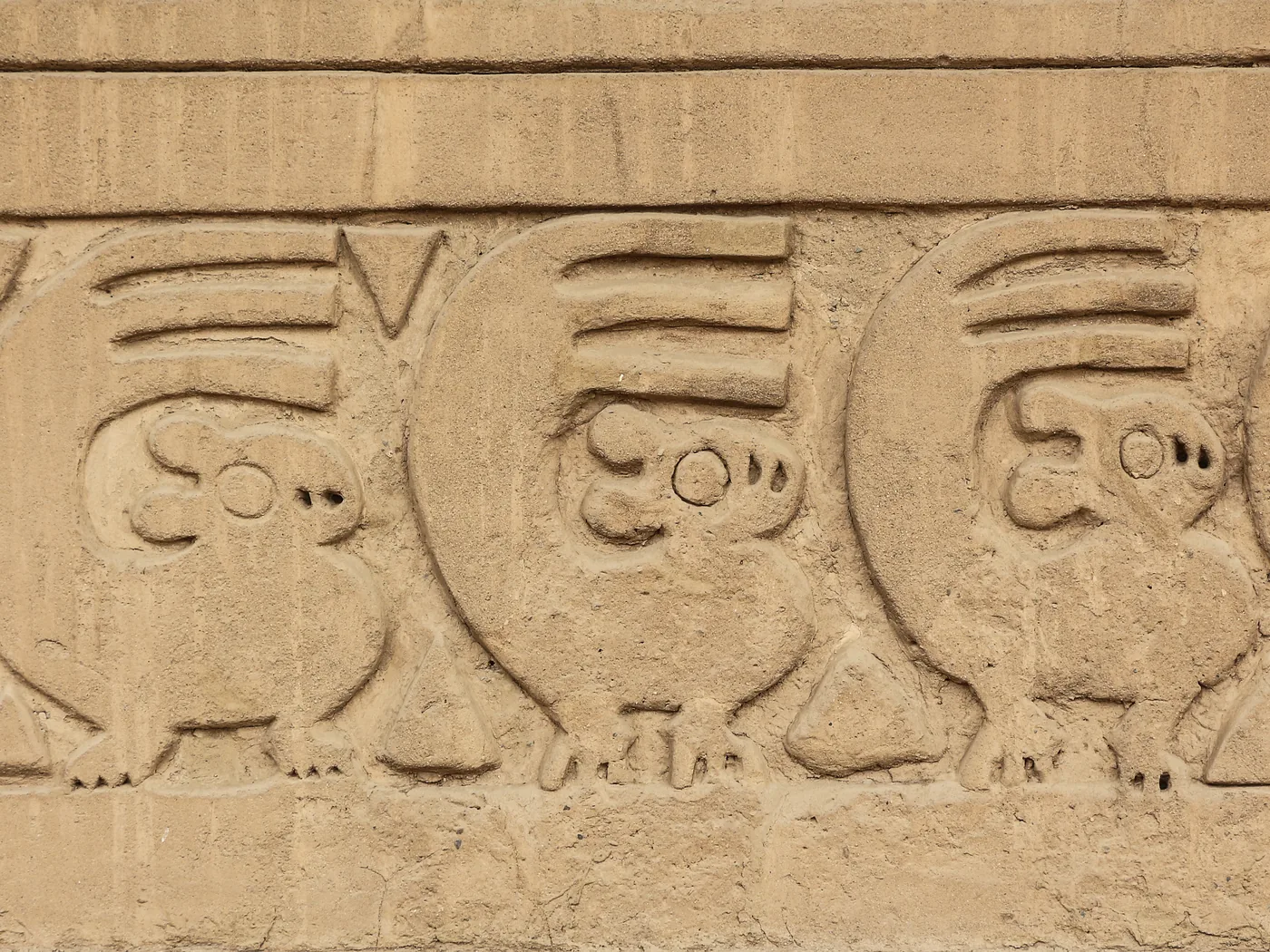
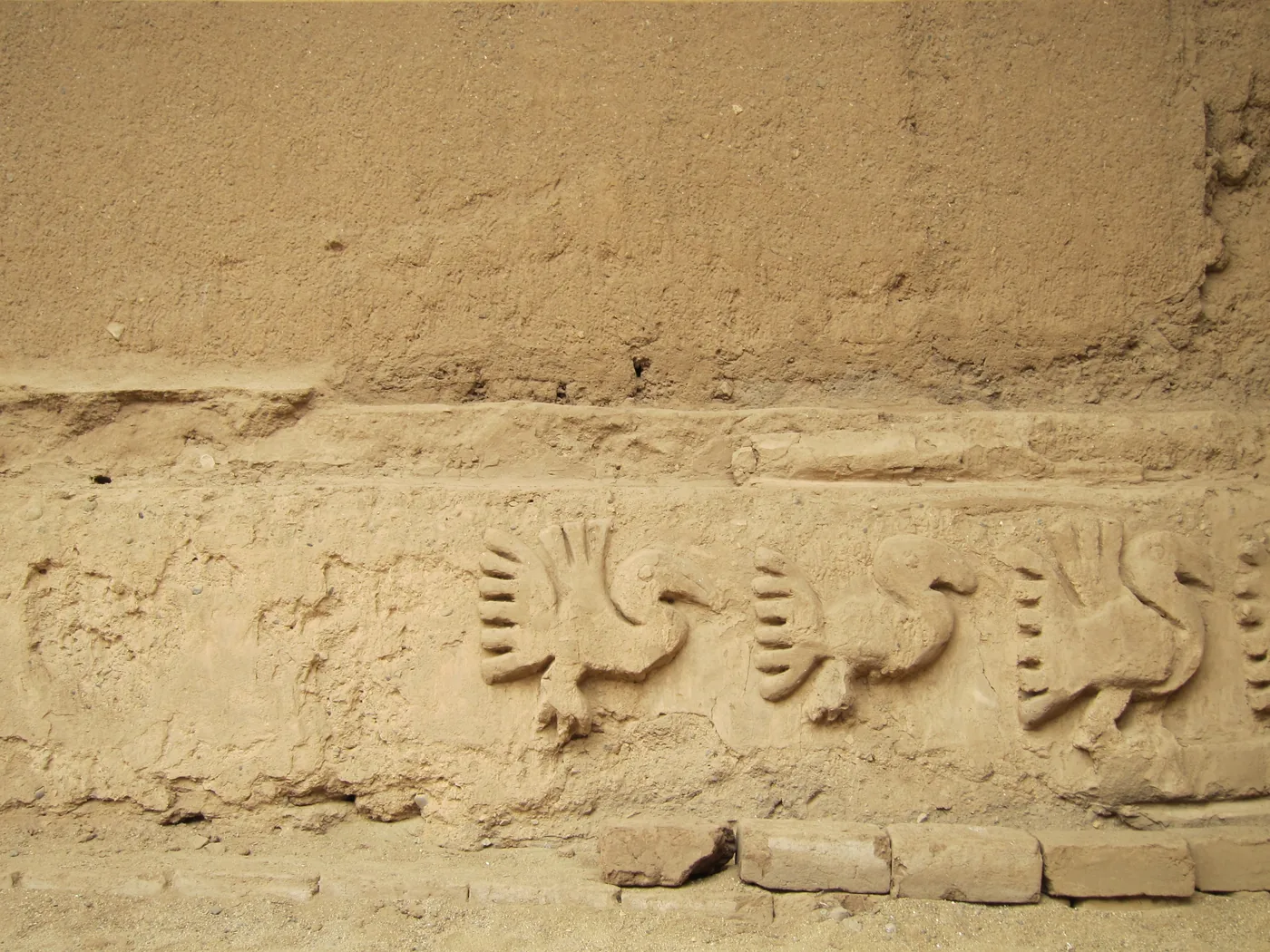
The Chimú were people of the Pacific, and their city shows it. The restored Nik An (Tschudi) palace is lined with adobe friezes of fish, waves, fishing nets, pelicans and sea otters — an entire ocean rendered in earth. These reliefs are the enduring signature of Chan Chan and unlike anything else in Peru.
A fragile wonder by the coast
Because it is built of earth, Chan Chan is vulnerable to rain and the El Niño rains in particular, and has been on UNESCO's List of World Heritage in Danger since it was inscribed in 1986. Visiting today — with its conservation shelters and restored courts — is a chance to see a monumental, and genuinely endangered, ancient city.
What to see at Chan Chan
What to see at Chan Chan
A visit centres on the restored Nik An palace, with the wider complex and nearby temples usually added by tour. These are the things to look for.
- Nik An
The Tschudi (Nik An) palace
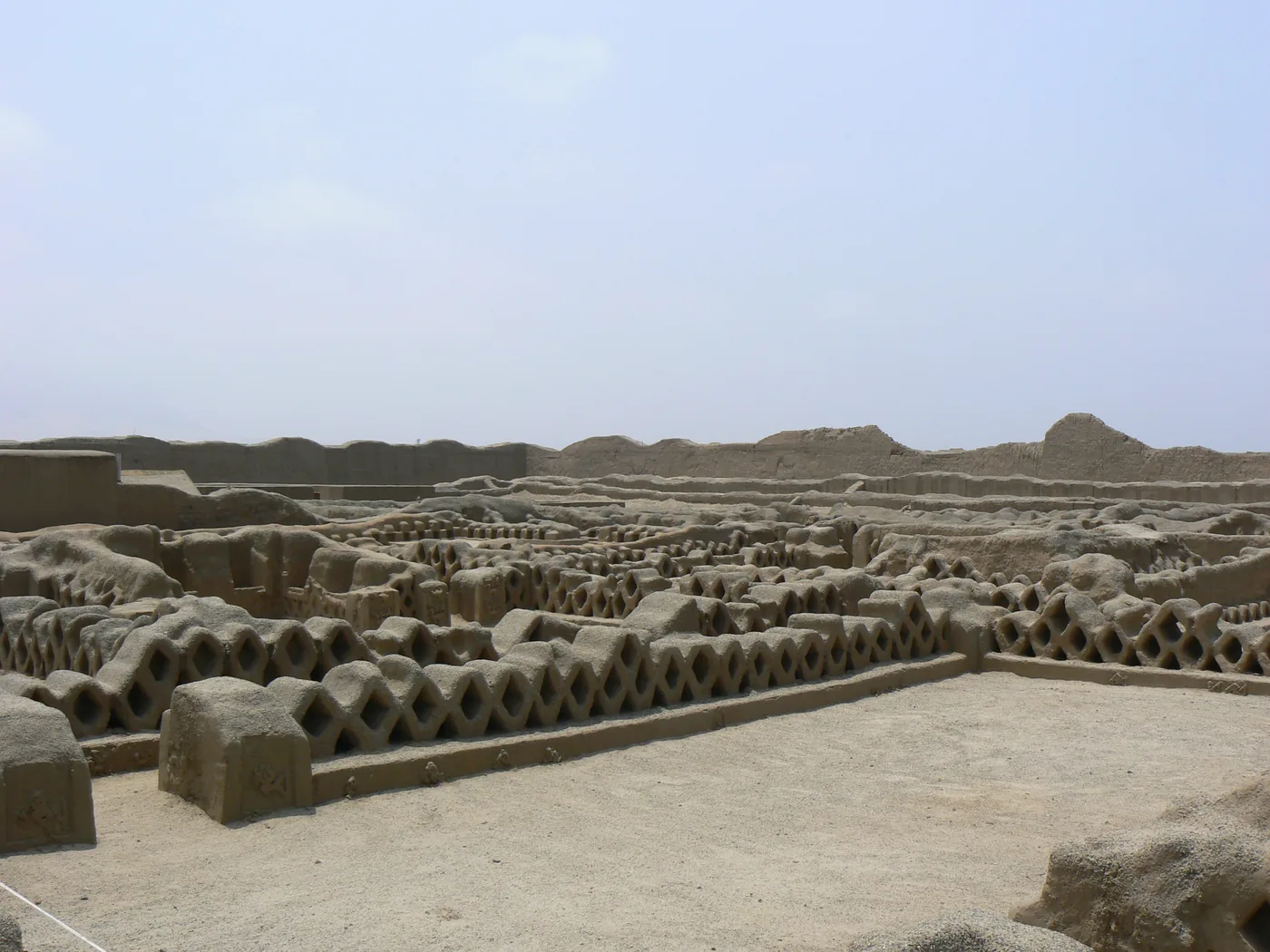
The one fully restored citadel and the heart of any visit — a walled royal compound of ceremonial courts, corridors and chambers that shows how a Chimú palace was laid out and lived in.
- The friezes
Fish, waves & seabirds in earth
The famous adobe reliefs: long walls patterned with fish and waves, fishing nets, pelicans and sea otters. They are the defining image of Chan Chan and the clearest window into the Chimú's ocean-facing world.
- The great court
The ceremonial plaza
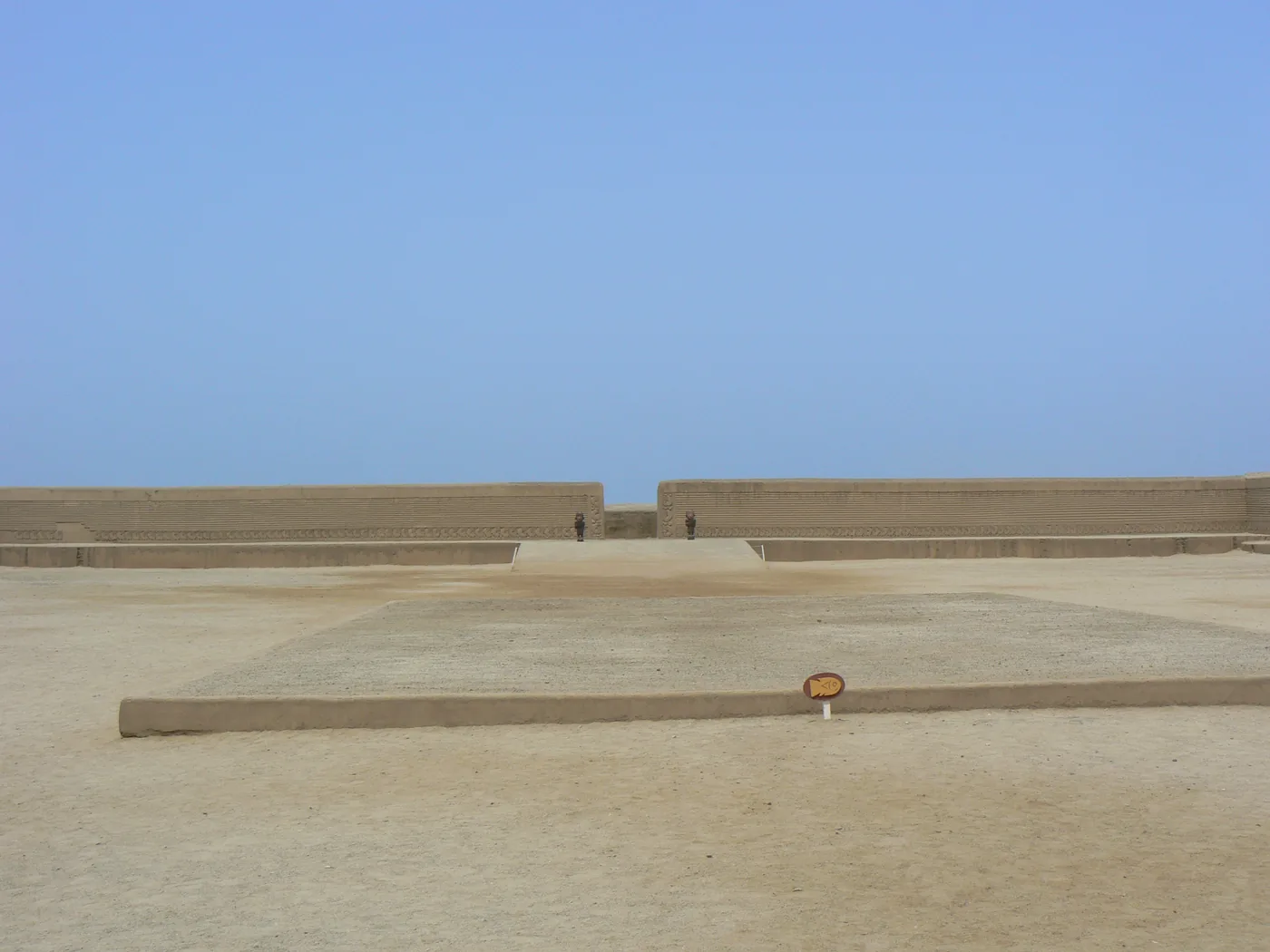
The vast entrance plaza of Nik An, ringed by high decorated walls — the grand public space where the power of the Chimú capital was staged.
- The huachaque
The walk-in well
A sunken ceremonial reservoir (huachaque) within the palace, cut down to the water table — a reminder of how this desert-coast city managed the water that sustained it.
- Site museum
The Chan Chan museum
The on-site museum sets the scene with finds, a model of the city and the Chimú story — most guided visits include it, and it makes the earthen ruins far easier to read.
- Arco Iris
Huaca Arco Iris & the temples
Nearby stand the Rainbow Temple (Huaca Arco Iris) with its mythical friezes, often visited alongside the Moche Sun and Moon temples — frequently bundled into the same day trip from Trujillo.
Seeing Chan Chan from Trujillo
Seeing Chan Chan from Trujillo
Chan Chan sits just outside Trujillo, and is almost always visited on a guided tour — often combined with Huanchaco and the Moche temples. Here's how it works.
Close to the city
Chan Chan is only about 5 km west of Trujillo, on the road to the fishing town of Huanchaco, so getting there is quick. Most visitors come on a half- or full-day guided tour that handles transport and the site entrances in one go.
Guided for a reason
The ruins are earthen and vast, and much of Chan Chan's meaning is in the friezes and the layout of Nik An. A guide turns weathered adobe into the vivid story of the Chimú — which is why almost everyone visits with one rather than alone.
Often combined
Chan Chan pairs naturally with Huanchaco's beach and reed boats and with the Moche Sun and Moon temples (Huacas de Moche). Many tours bundle two or three of these into a single day — an efficient way to see the north coast's highlights.
On site
You'll walk on open, sandy ground in coastal sun with little shade, so bring a hat, sunglasses, sunscreen and water, and wear comfortable shoes. Keep to the marked routes and shelters to help protect the fragile adobe.
Chan Chan & the north coast, in pictures
Chan Chan & the north coast, in pictures
The adobe walls, ocean friezes and palace courts of Chan Chan, near Trujillo and the Pacific.
Tour options & what's included
Tour options & what's included
| Option | What it includes | Good to know |
|---|---|---|
| Chan Chan half-day | Transport from Trujillo, entrance, guide at Nik An | The focused way to see the city itself |
| Full-day north coast | Chan Chan + Huanchaco + the Moche temples | The most popular, best-value combination |
| Private tour | Your own vehicle, guide and pace | Flexible; the priciest option |
| Shore excursion | From Salaverry port, timed to your ship | For cruise arrivals on the north coast |
Ways to visit Chan Chan
Find a Chan Chan tour for your dates
Every option below books through Viator's own system, so you can check real slots and your total price, shown in your currency, before you commit to anything.
Live availability and pricing from Viator, shown in your own currency.
Planning your visit
Planning your visit
Half day or full day
Chan Chan on its own is a half-day; combined with Huanchaco and the Moche temples it becomes a full day. Decide how much of the north coast you want in one go, then pick a tour to match — the full-day combinations are the most popular.
Go with a guide
The site is earthen and easy to under-read alone. A guide brings the friezes, the palace layout and the Chimú story to life at Nik An, and handles the logistics between Chan Chan, Huanchaco and the temples — well worth it here.
Dress for the coast
It's open, sandy and sunny with little shade. Bring a hat, sunglasses, sunscreen and water, and wear comfortable closed shoes. Mornings can be grey and cool on the coast, so a light layer helps early in the day.
Combine with Huanchaco
The fishing town of Huanchaco — with its reed caballitos de totora and ceviche — is minutes away and pairs perfectly with Chan Chan. Many tours include it, and it's a lovely place to end the day by the Pacific.
Booking flexibility
Look for the free-cancellation tag on a listing — most honour it up to 24 hours before your slot, and several let you lock in a spot now with nothing charged until later, which helps while the rest of your Trujillo days are still up in the air.
Planning a Chan Chan day from Trujillo
Planning a Chan Chan day from Trujillo
Visiting Chan Chan from Trujillo: the tour, what to see and how to plan
How much time to set aside, why a guide is worth it here, and what actually makes this adobe capital worth the trip — a plan for the day.
Read more → THE CIVILIZATIONWho Were the Chimú? The Kingdom Behind Chan Chan
Chan Chan was the capital of a coastal empire that worshipped the moon over the sun, mastered gold and tumbaga metalwork, and fell to the Inca around 1470.
Read more → HOW IT WAS BUILTInside Chan Chan's Adobe Walls and Ten Royal Citadels
Chan Chan wasn't one palace but ten walled citadels, each raised in adobe by a different Chimú king — how the world's largest earthen city was actually built.
Read more → READING THE WALLSFish, Waves and Birds: What Chan Chan's Friezes Mean
The adobe reliefs at Nik An aren't mere decoration — they're a coded record of the sea the Chimú depended on, stamped into hundreds of metres of palace wall.
Read more → A RACE AGAINST THE RAINWhy Chan Chan Is a UNESCO Site in Danger
Chan Chan is built entirely of earth on a coast that floods every few decades — UNESCO put it on the endangered list the same year it was inscribed, 1986.
Read more → THE WIDER NORTH COASTBeyond Chan Chan: The Moche Temples and Huanchaco
Chan Chan sits in a valley shaped by two other chapters of Peru's coast — the Moche who came centuries earlier, and a reed-boat village still fishing that sea.
Read more →GEO/FAQ
Chan Chan tour questions
What is Chan Chan?
Chan Chan is an archaeological site on Peru's north coast near Trujillo — capital of the Chimú kingdom and the largest adobe (mud-brick) city built anywhere in the ancient Americas. Raised from around AD 850 across roughly 20 km², it holds ten walled palace-citadels and is known above all for its adobe friezes of fish, waves and seabirds. It went on UNESCO's World Heritage list in 1986.
How do I get there from Trujillo?
Chan Chan is only about 5 km west of Trujillo, on the way to Huanchaco, so it's a quick trip. Most visitors go on a guided half- or full-day tour that includes transport and the site entrances — often combined with Huanchaco beach and the Moche Sun and Moon temples.
Is it worth visiting?
Yes — Chan Chan ranks among the great ancient cities of the Americas, and nowhere else has ocean-themed adobe friezes like these. Much of what's standing is weathered earth that's hard to read on your own, so having a guide changes the visit substantially, which is why nearly everyone books one. Combine it with Huanchaco and the Moche temples and you have a genuinely rewarding day out.
What will I see there?
The centrepiece is the restored Nik An (Tschudi) palace — its ceremonial plaza, corridors, the walk-in well, and the famous friezes of fish, waves, nets and seabirds. There's an on-site museum, and nearby stands Huaca Arco Iris (the Rainbow Temple). Many tours add Huanchaco and the Moche temples.
What should I bring and wear?
Chan Chan is open, sandy and sunny with little shade, so bring a hat, sunglasses, sunscreen and water, and wear comfortable closed shoes. Coastal mornings can be cool and grey, so add a light layer. Stick to the marked routes and shelters to help protect the fragile adobe.
Can I combine Chan Chan with other sites?
Yes — the most popular combos pair Chan Chan with Huanchaco beach and the Moche Sun and Moon temples (Huacas de Moche), and a handful throw in Huaca Arco Iris as well. Open a combo listing on Viator and you'll see the exact stops and the price you'll pay before booking, with free cancellation still available up to 24 hours out.